Friday, 8 April 2011

AS Film Sequence Evaluation – Matthew Dunn

The sequence we have created is from a fictional film titled Something in the Way, a biopic following Kurt Cobain's early life. As the editor I had the job of using Final Cut, a video editing software, to make the shots combine to make a cohesive sequence. I also applied minor visual effects and acted. Decisions made regarding the editing were largely democratic, allowing for a wider pool of criticism and hopefully, a better sequence. 
The genre  that we studied as a group was a biopic and as such I tried to be more subtle with editing. Obviously there was no need for any garish effects or tricks. The most important part was  establishing continuity in the sequence. There was difficulty in getting certain shots to look fluid as we had, at times, too few shots to use. We had to work around this, at one point removing a line due to it's poor consistency with other shots. Most difficulty was in combining shots fluidly, due to acting difficulties we could not do a whole dialogue segment in one take, we instead had to do multiple takes of individual lines. Because of this there was quite a bit of discrepancy between takes, with actors standing a little further to the left or right, and audio sounding noticeably different. I minimised the effect this had by avoiding rapid cuts to and from different takes with the same element in the frame, this meant that the video looked fluid and then the audio could create the illusion that the sequence is playing out in real time. To do this our sound man played a single ambience track throughout the piece, connecting different video shots. 
After receiving feedback we decided we needed to make some significant changes to the piece, particularly with sound, editing, and their synchronisation. The chase sequence had shots that were very drawn out and had infrequent cuts. Because of this we had to then play around with the shots, cutting from one to another more. The largest problem was then with audio synchronisation, which our sound engineer managed to find a solution for. 
We tried to show through the narrative what was happening rather than just with the plot, the camera angles were manipulated so that Kurt was often seen from above, creating a small and meek  appearance, whereas his antagonists had the opposite. In editing I had to speed up the pace of the chase section midway through our sequence, this meant making sure there were lots of cuts to different shots, it was very difficult doing this and preserving continuity, as that chase sequence had  very few good shots taken for it. Using faster cuts during action sequences is a staple of film making to increase audience tension. 
The development of the initial ideas in the group was collaborative, we pitched concepts to each other and decided which of them would work, and then which would be effective. There were times when we had to change plans, at one point we intended to have our protagonist simply getting assaulted, but we decided against this. Our director provided useful ideas, many of which were used in the sequence, under his direction we were able to focus more on technical work.
The audiences reaction towards the editing in our sequence should not be a cognitive one, there are no instances where I used the editing in such a way to get the audiences attention, rather I attempted to focus on creating a cohesive piece that subtly adds to the narrative. For example, working with the director, I added a visual filter to the video, making it a tiny bit more grey and drab, to someone unaware of this it would likely be unnoticeable, but it all contributes towards the feel we were trying to emulate of monotony and depression. A big problem with our sequence as a whole was believability, obviously we lacked A-star actors, and we had difficulty finding a setting that we could conceive to be part of 1980's America. Because of our desire to create immersion and believability, the editing was decided to be a behind the scenes process. 
Unfortunately software constraints meant we did not achieve our full vision with regards to editing, we had hoped that we could manipulate visual filters to give our sequence a look reminiscent of 80's film, but we had a major technical failure and had to settle for the desaturation filters used.  


Wednesday, 6 April 2011

AS Film Sequence - Sam Levitt, cinematography.

Our extract comes from an imaginary film called Something In The Way, which is a biopic which depicts the life of the influential rock star, Kurt Cobain. Our sequence is from an early part of the film, where Kurt is still in school. In the sequence he is aged around 16-17 and is being bullied. My part in the creation of the sequence was cinematographer. This meant that I shot all of the shots, deciding what angles and shot kinds to use as to achieve desired effects. I also gathered many of the props used in the sequence in the weeks before filming.

In our sequence we followed quite closely to the conventions of biopics. Our main character is an ‘outsider’ who gets in to trouble if not with his teachers, then definitely with his fellow students. The sequence would have been quite early in the film as Kurt is still at school. When Kurt was in his teens he moved to a school where he was not popular, and was bullied by people who used to say he was gay. Kurt used to get revenge on these people by spray painting words like ‘fag’ on to their cars. In the sequence one of the bullies in confronting Kurt because he suspects that Kurt vandalised his truck. We decided to make our piece similar to other biopics by making it feel dramatic rather than scary or humorous. This was achieved by the how trivial the scene was that we shot, as well as the use of subtle shots that don’t overwhelm the viewers but slyly nudge them      toward our desired effect.

As Kurt was being bullied in this part of his life, I decided that it would be best that we used camera angles that best exaggerated the difference in power between Kurt and the ‘Jocks’ that were bullying him. I achieved this affect by advising the actor playing Kurt to be sitting down in the scene, I then shot him from above to make him look smaller than he was in real life, Kurt the character was then implied to be powerless and/or insignificant. There were also some long shots of Kurt which gave the same effect.  I also shot the ‘Jocks from below so that they would appear to be larger than they are. This made them look larger, stronger, more menacing and generally in more control of the narrative than Kurt.


There is a shot in the sequence where the ‘jocks’ have started to chase Kurt, and I am moving with them as they all run. The shot moves and is a bit unstable. This makes the audience of the film feel more involved with the action; it also makes the chase scene feel faster paced and creates more of a sense of urgency about the actors movements. I was inspired to use this shot by another biopic that I studied about Johnny Cash, which was called Walk The Line (Mangold, 2005). There is a scene in this film where Johnny Cash and his current wife Vivian are fighting, Vivian is advancing on Johnny and slapping him. This scene is shot using a hand held camera so it is closer, but more unstable than a normal camera would be. In Walk The Line this made the audience feel much closer to the characters and their emotions. I decided that although the situation would not be the same in our film, the effect achieved if I used this technique would be equally as effective at making the audience feel closer and more involved with the action.

 I have been told that the shots I used were very effective in the chase scene. There are quite a few films that I could mention that helped me think of ways to shoot this part of the sequence, in particular films like 28 weeks later (Boyle, 2007), which has a lot of chase scenes that influenced me. Unfortunately I made a mistake when I decided that we should film the sequence chronologically, as it was quite hard to get back in to the same position every time when I was filming the bullies so the angle jumps between shots sometimes.


In conclusion, my job as cinematographer was to create the sense that Kurt was struggling and that there was a good chance that he would be struggling all his life. I did this by using camera angles that made him look weak, powerless and insignificant, whilst everyone around him was powerful and confident. I also had to make sure that the audience were always as connected emotionally to the characters and to the scene as possible. I did this by using some moving, more unstable shots which made the audience feel closer to the action.


Tuesday, 5 April 2011

Tuesday 5th April progress report

Today we finished fixing the video continuity and are now moving onto checking how filters work.

Sunday, 3 April 2011

AS Film Sequence Evaluation - Otis Moorman

The sequence we decided to create is from a film we named Something in the Way, a biopic based on the early life of musician Kurt Cobain. For this project, I took up the role as director, and as such I was in charge of the mise-en-scène in the scene. Due to the setting of our piece, my supervisory role over the mise-en-scène also made appearances in the editing stage of the sequence's development. Despite my contributions across the sequence, our group plans for the mise-en-scène and general direction of the sequence remained the same from the idea's conception to its closure, which should hopefully result in a solidly-constructed scene.

As our film's genre was classified as a biopic, we had some leeway in terms of how we could handle it. In the end, we decided to present the story in a more dramatic way, though not particularly heavy-hearted. In terms of the mise-en-scène, this meant using sensible, straightforward props and costumes as well as 'straight' performances from the actors. In combination with the general triviality of the scene we shot, this made our final sequence balanced in terms of its dramatic and more light-hearted (though not necessarily comedic) qualities. Furthermore, a necessity of biopics is that they are based on factual events. Since our film is set in the early 80s, we had to put restrictions on what could be seen in the shots. As we were shooting around the college, we had to be careful not to capture any of the more modern buildings in the shots. This also applied to costumes and props, where we had to maintain a vintage look. We achieved this in two ways: one, the characters of the jocks are stereotypical and as such their clichéd image has not changed much over the last 30 years. This allowed us to easily acquire stereotypical jock clothing without it seeming too modern. Secondly, with the character of Kurt, we purposefully used old, rubbish-looking clothes which we decided to be kind of timeless. In tandem with this, we avoided branded clothing. We got the general basis for the costumes (particularly for the jocks) from various 80s teen movies, most notably the Breakfast Club (John Hughes, 1985, US).

Our sequence is not a particularly massive highlight of the overall rhetorical film's narrative, but it is important in establishing Kurt's character. We often shot Kurt from a high-angle or from far away, making him appear vulnerable or insignificant. We also dressed him in battered clothing in order to symbolise the struggle of his life. This of course ties in with the actual events that occur in the scene - Kurt is faced against unfair odds, but manages to triumph in the end. In some respects, the mise-en-scène does contribute somewhat to the overall narrative. Kurt attempts to light a cigarette in the beginning which we deliberately made to look like it could be a joint, giving a subtle hint towards his future drug addiction (which presumably would be included in the rhetorical film).

As director, it was vital for me to work with and suggest ideas to other group members in their own roles. I came up with many of the camera shots used in the sequence, many of which develop the narrative, character and genre. As previously mentioned, the high-angled shots of Kurt add dimension to his character by making him seem vulnerable, whereas the low-angled shots of the jocks makes them look empowered. I also came up with the shot where you see the jocks pushing Kurt against the tree from behind and above. My thinking behind this was that this event, while seemingly important now, is actually just an insignificant part of Kurt's life story, and thus the narrative of the film. I also worked with the sound man in suggesting tracks that influenced Kurt's music and that would be reminiscent of the time period the sequence is set in, contributing to the 'vintageness' vital to biopics. Lastly, I worked with the editor in adding filters over the film, again adding to the vintage feel of the film.

Due to the film being a biopic, my main intention was to get the audience to believe in the world we had created. In order to achieve this, we made the sequence appear authentic in several ways, most of which have been mentioned already. The combination of colour filtration, costumes and music will hopefully make the audience believe that the film was shot in 80s Washington. However, other features of the mise-en-scène should also have an effect on the audience, such as the various camera shots and proxemics used in the confrontation and chase, hopefully evoking a sense of danger. Since this is a biopic, this should generate some natural sympathy for the character of Kurt, so adding an element of risk to the authentic and somewhat dangerous scene should make the audience feel invested in the character and narrative. This was in part inspired by other biopics such as Ed Wood (Tim Burton, 1994, US) where the main character is often thrown into dangerous situations which are given weight through exploiting the biopic genre.

Upon screening a rough cut of the sequence to an exclusive test audience, the group received some constructive feedback. We were at once notified of our actors' atrocious accents, which taught me to get better actors in future endeavours. Upon watching the footage, it was clear to the test audience that the takes we had could have been done better, which made it clear that next time multiple takes should be done (we attempted two takes per shot, but evidently this was not enough). Furthermore, we encountered most suggestions in regards to the chase section of the sequence. When filming, we weren't entirely certain on the tempo of the music and so we did not incorporate this into our shooting. The result was the music being a faster pace than the actual chase, which added some distracting dissonance, which took away from the effect I was trying to create. Thankfully, we were able to sort this out after much scrutiny in the editing stage, though this could have been avoided by, again, filming more and more takes of each shot. Over than these problems, however, reception has been positive, especially in regards to the authenticity of the mise-en-scène and intense pacing.

In terms of technical problems, there have been very few incidents where these limitations have affected the mise-en-scène and direction. The main problem in this respect was the fact we were using a single-camera set-up, which made shooting the initial dialogue sequence awkward and in some cases inconsistent (for example, the camera placement on the jocks changes as the conversation progresses). We could have avoided this by being more careful with our filming, by filming the whole dialogue sequence multiple times, each from each different angle, or by getting a second camera. However, this was the only problem we encountered during production. Post-production heralded several minor problems, mostly concerning our lack of experience with the editing software, but this was overcome as the editing went on.

To conclude, my role as director gave me the responsibility of maintaining much of the authenticity that is vital to the biopic genre, as well as creating meaning for the audience through mise-en-scène which impacted the narrative, genre and character present in both the sequence we shot and the overall rhetorical film. This was achieved through the practical use of props, costumes, positioning and acting on the day of filming, and also during the post-production stage where we were able to emphasise certain things through use of editing as well as adding visual effects in order to enhance the viewing experience and overall meaning of the sequence.

Evaluation essay

Bill Duffy
AS Film Sequence Evaluation
The film sequence we have made is from a film of our own design called Something in The Way. The film is a biopic depicting the early life of Kurt Cobain. My role was the sound man which meant I had to deal with the sound during editing and ensure that it fitted in well with the clip. The only microphone used was built into the camera, so the sound engineering was essentially restricted to the editing stage rather than the filming.
The genre of a biopic means that we had to the inevitable restriction on the narrative, because the subject matter is factual. However the film sequence does involve a postulated event from his teenage years, which is consistent with what we know of his life but which may not necessarily have happened. Another restriction with this genre is that as Kurt was a teenager in the early eighties we had to shoot in a wood and make sure that no buildings or items of clothing indicating the current era are in the shot. The group created the narrative together after deciding to focus the sequence on his teenage years. We thought the bullying would be one of the best scenes to film on account of us not being able to actually use the college for a setting for inaccuracy reasons.
One way in which the genre changed our decisions was the music in the background for the chase sequence. We decided to use music appropriate to Kurt Cobain’s musical tastes at the time. We chose a non copyrighted cover version of ‘Shake Appeal’ by Iggy and the Stooges. This reflects Kurt’s interest in punk and alternative music in his teenage years. The director provided us with the cover of ‘Shake Appeal’ and I worked with him on fitting it into the right place in the film sequence. The song is fairly fast paced so we had to insert it just before the chase sequence. This way the sequence has a dramatic change of pace. 
On filming the sequence we realised that some of our ideas had to be adapted or changed for various reasons. One of the most drastic changes we will make is dubbing the dialogue over the film. This is because of the poor acting and unconvincing American accents which make the film seem cheap and poorly put together. As the sound man I will be providing the voiceover and recording the sounds. Another problem we faced was the sound of traffic and trains going past, which can be heard at certain parts of our film. These will be cut out and replaced with ambient noise such as birdsong which will be appropriate to the wood setting. A minor change we made was the swapping of actors to kick the actor of Kurt when he is on the ground. Originally we had jock 1 fulfilling this role, but we decided to change to the second jock on account of jock 1’s modern shoes. The shot was low angle so his shoes would have been visible and this would have lost us some realism. The other actor was wearing Converse which fit in much better with the eighties setting as they were very popular at the time.
The sound in the film should have certain effects on the audience. The dialogue should be believable and convincingly American. Also as we are dubbing the dialogue in, we have to make sure that it syncs properly with the film sequence. The soundtrack during the chase sequence must give the film a fast and exciting feel. Also the sound effect used when Kurt kicks the jock in order to escape must sound realistic. To find this we had to look through hundreds of different action sounds until we found a suitable effect.
The feedback we got helped us deduce what was wrong with the clip and leave in the aspects that worked. Examples of the successes are the camera shots and smoothly cut chase sequence. We have decided to remove the aforementioned dialogue because of the feedback we got regarding the accents and believability of the sequence. Another piece of advice we got was about the chase sequence. This needs to be cut so that there are more shots of each individual action. This will fit better with the fast paced soundtrack.
In conclusion, my role in the group as soundman helped give our film an authentic 80s feel because of the music and how it works with the sequence.  

Wednesday, 23 March 2011

Tuesdays lesson.

Today we spent the lesson cutting and slowing and changing our footage so that it (hopefully) comes out the other end a decent film. We also put the soundtrack on to the FinalCut project.

Tuesday, 22 March 2011

Problems with camerawork

I have identified a few problems with the camerawork. The first problem is that we have a lot of footage of Matt fumbling to light his 'joint' but the editor is struggling to turn it in to something decent that works. The other problem is that I think we may need to re-shoot the 'jocks' trying to find Curt at the end as I didn't get a shot of them leaving. We might not need to re-shoot as it may work but could easily be a problem.

Work Done Today (The Director)

Since we were basically just cutting out the directions shouted out in editing, I didn't have much to do today apart from advise on which clips we'll be using. We noticed that some of the clips, especially the dialogue, was a bit squiffy. So we'll be making use of dubs in future lessons. We'll also get a start on the actual editing next lesson.

Work done and problems for sound

Today we have begun editing our footage and i have created ambience noises on garage band to add to the start of the clip. the problem we have encountered is the poor American accents by our actors. We will overcome this problem by dubbing the sound over.

Work that has been done today. (Tuesday the 22nd of March, 2011)

My name is Matt and I do the editing.
Today I edited lots and lots of stuff and it was super fun and I will edit lots and lots of stuff next lesson and the lesson after and so on ^.^

Wednesday, 16 March 2011

Rehearsal

We have found two people to act as our jock characters, and have rehearsed the scene.

Props

To film our sequence we need:
  • Baseball jacket
  • Baseball t-shirt
  • Zippo/lighter- Mate says we can borrow his, should be fine.
  • roll up- Should be easy to get hold of.
  • Matt's clothes
  • American football
  • 'Jocks'
  • Old headphones- Probably won't be able to find any, but this is not a big problem.

Plan for today (Wed 16th March)

Today we are finalising decisions regarding the music/mise en scene for the sequence we will film.  We will be filming on the upcoming Friday.

Tuesday, 15 March 2011

success

I've (sam) found some people that are willing to be our 'Jocks'.. both have a free tomorrow fourth period and Barney said we'd be able to have a camera then. Everyone good to film tomorrow?

Wednesday, 9 March 2011

Poster

Script

Establishing shot following Kurt to sitting under the tree. Shot then cuts to a close-up , from slightly above of Kurt, of him fumbling to light a 'Joint'. Suddenly an American Football (Basketball if we can't find a football) hits either Kurt or the tree above him. He looks up (point of view shot) and sees two 'Jocks' walking toward him. They come very close to Kurt, looming over him looking very large.

Jock 1: Hey Kurt Cocaine
(Kurt sighs but continues to look down toward his feet.)
Jock 1: Hey Cocaine we're talking to you! (Kicks Kurt in the feet/legs.)
(Jock 2 laughs, Kurt looks up at them.)
Jock 1: Somebody sprayed the word 'Fag' on to my truck last night Coke.
Kurt: So?
Jock 1: So.. Would you happen to know anything about it?
Kurt: Why would I?
(Jock 2 grabs Kurt by the front of his clothes.)
Jock 1: (Getting threateningly close to Kurt's face.) Because we think that it was you..
(Awkward few moments when they all stare at each other, then Kurt kicks the Jock holding him in the shins and runs off toward the woods.)

As Kurt begins to run off Jock 2 is holding his shin in pain. Jock 1 eventually gets him to hurry up and start chasing Kurt. Kurt runs over the bridge and jumps in to the ditch. He looks through a gap in the fence and sees that the Jocks have lost him.

Jock 1: We lost him, I'm starting to think your a fag as well man!
(He lightly slaps Jock 2 on the back of the head)

Filters

Our film is set near Seattle, which stereotypically appears bluey-grey and miserable. In order to clarify to the audience that it's near Seattle, we'll be adding filters to the film/reducing saturation on the camera in order to make it appear more grey, making it appear more authentic.
Another thing we could do is try to make a Polaroid-y effect as a filter. This somewhat glossy/fuzzy look is often associated with the 80s and would make it clear that our sequence is set in the 80s, which could potentially be ambiguous depending on the camera quality. Implementing this depends on the editing software we use.

Thursday, 3 March 2011

Location

Still trouble regarding a location for the sequence. Anywhere with buildings or cars visible is not going to work because of differences in modern and British design with what was seen in 1980's America. The woods/line of trees out by the back of the Art block could work quite well, Kurt was raised in a logging town and so it's quite plausible. The problem with this option would be a main road running parallel to the strip of trees, it's up on a steep bank though, so they wouldn't be visible even when they pass. We could potentially film inbetween cars going by, or just include the noise, the mics on the cameras might not even pick them up.

Wednesday, 2 March 2011

Props & Costumes

Props
American football
Old headphones
Fake joint or cigarette
Lighter (Zippo)

Costumes
Kurt:
     old-looking/battered-ish clothes; t-shirt, jacket/hoody, torn light jeans, Converses
Jocks:
    1: baseball jacket, light jeans, trainers
    2: baseball shirt, light jeans, trainers, possibly a jacket around waist

Kurt circa whenever

Aim for this mise-en-scene stuff - possible costume and props
Maybe add filters to make it look like an 80s polaroid during editing to make it have more of an 80s vibe

Also:
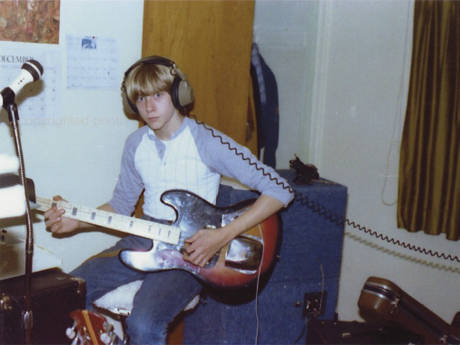
KURT COBAIN BOY NIRVANA WALLPAPER
May be slightly younger, but still.

Film Coursework Pitfalls

After analysing various coursework pieces we have noticed several mistakes that tend to reoccur with student film. Most films with action sequences tended to seem strained and had awkward camera angles. Due to the style of film we are making this will be easy to circumvent. Another problem is with dialogue, the student accent is easily recognizable and comes across as amateurish, we will try to avert this by using false accents and minimising dialogue.

Conventions of Biopics

- The rise and fall narrative
- A tendency to be subtle and underplayed
- Soundtracks relating to characters/plots (Especially for musical artists)
- Biopics take place over an extended period of time (Often many years) this distinguishes them from "Based on a true story" films.
- Tend to end with the protagonist's death, getting married, finding God, "growing up", his downfall, or his greatest triumph.
-Often feature montages and time skips as a method of compressing narrative. (We will not need to do this)
- If the film is set in the past then often there will be mise en scene or diagetic (Even non diagetic) sound to enforce the the authenticity of the time period. Often a song may play or a poster will be seen that is iconic of the era.

References for research.

http://en.wikipedia.org/wiki/Kurt_Cobain
www.burntout.com/kurt/biography/ -
www.hardlyfamous.com/stars/cobain-kurt -
We searched several lyrics sites for a title,
http://www.elyrics.net/song/n/nirvana-lyrics.html
http://www.metrolyrics.com/nirvana-lyrics.html

http://www.lyricsmania.com/nirvana_lyrics.html

Music

We decided it would be best to have the soundtrack reflect Kurt's personal tastes, relative to the time the film is set. Our sequence is set around 1983, and so music from the 70s and early 80s will be used.
While we're not certain what specific songs we'll be using, judging from Kurt's Wikipedia page we unanimously agreed upon doing something by the Stooges (one of their albums was allegedly Kurt's favourite of all time) and possibly Melvins or the Sex Pistols. What song we'll use depends upon what we want the scene to feel like, which we don't know at the moment. We'll probably just need one song, but we'll get a couple just in case.
Because we can't use actual songs, we'll be using instrumental cover versions which I'll work on with a music-y friend once the specifics have been sorted. We'll make several so we can decide which is the perfect match for the film.
We decided against using Nirvana songs for the film as it would seem cheesy and distracting, seeing as it's set before any of those songs were even conceived of. This is prototypical of biopics of this nature (for example, Nowhere Boy) as it brings focus to another side of 'the story' by showing the main character's influences and not their own product.

Possible songs
  • The Stooges - Raw Power
  • The Stooges - Shake Appeal
  • tbc

Friday, 18 February 2011

Potential titles for biopic

Teen Spirit (After researching we found similar titles were already taken)
Cobain: The Early Years (Practical but boring, not gripping)
Something In The Way (We decided on this one)
Teenage Angst (Possibly too obscure, can be confused with similar titles)
Negative Creep

One sentence pitch (Biopic)

You knew him for what he did, now know him for who he was.

A gripping biopic detailing the early life of grunge legend Kurt Cobain. From his parents divorce at the age of 8 to the release of Bleach in 1989. (Movie title) shows the challenges he faced from childhood to his gradual and shaky ascent into rock history.